
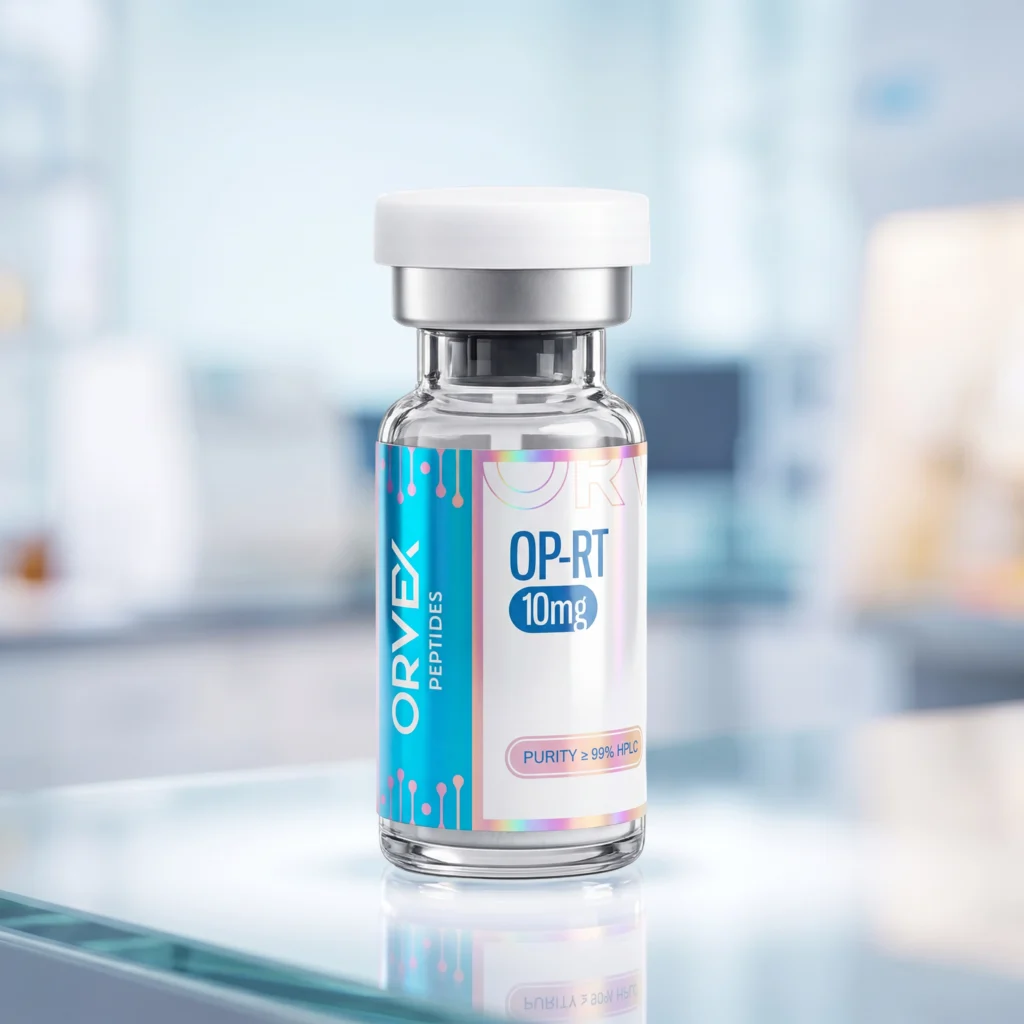
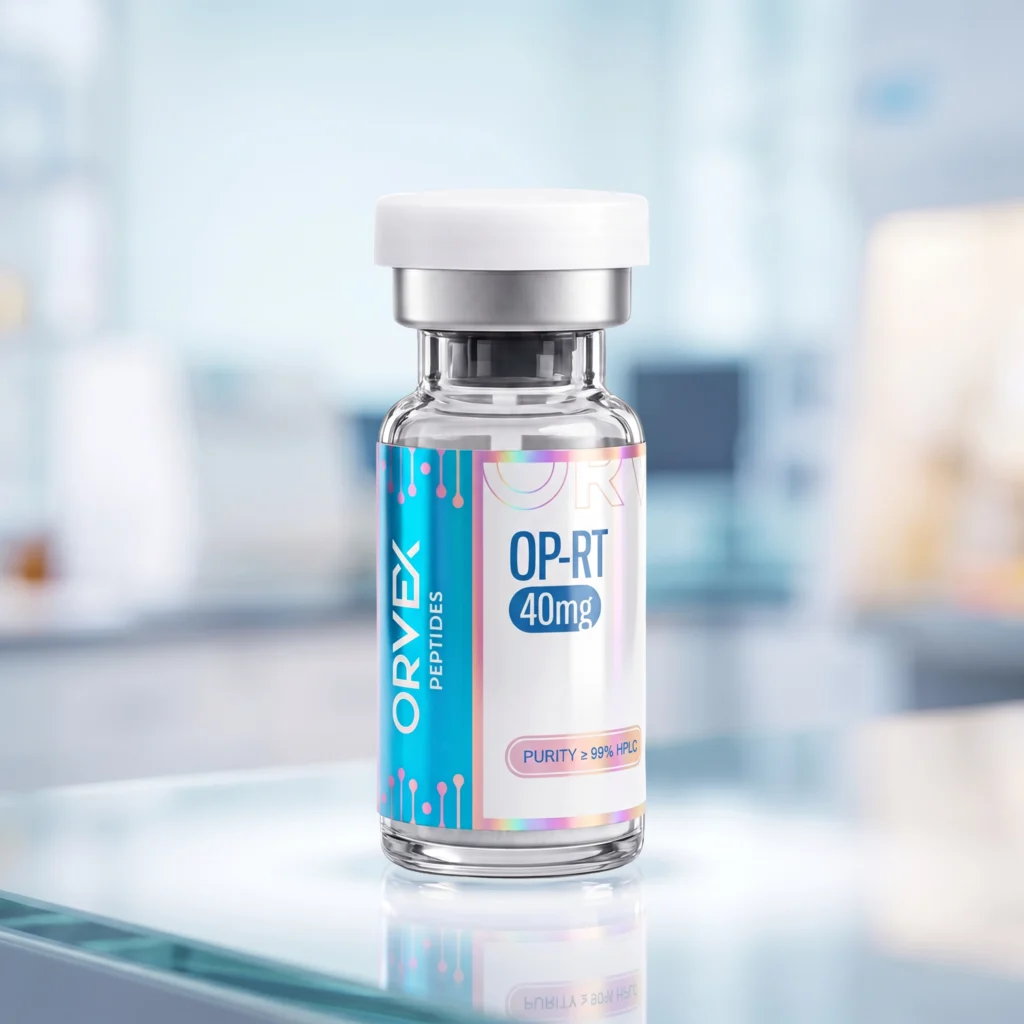
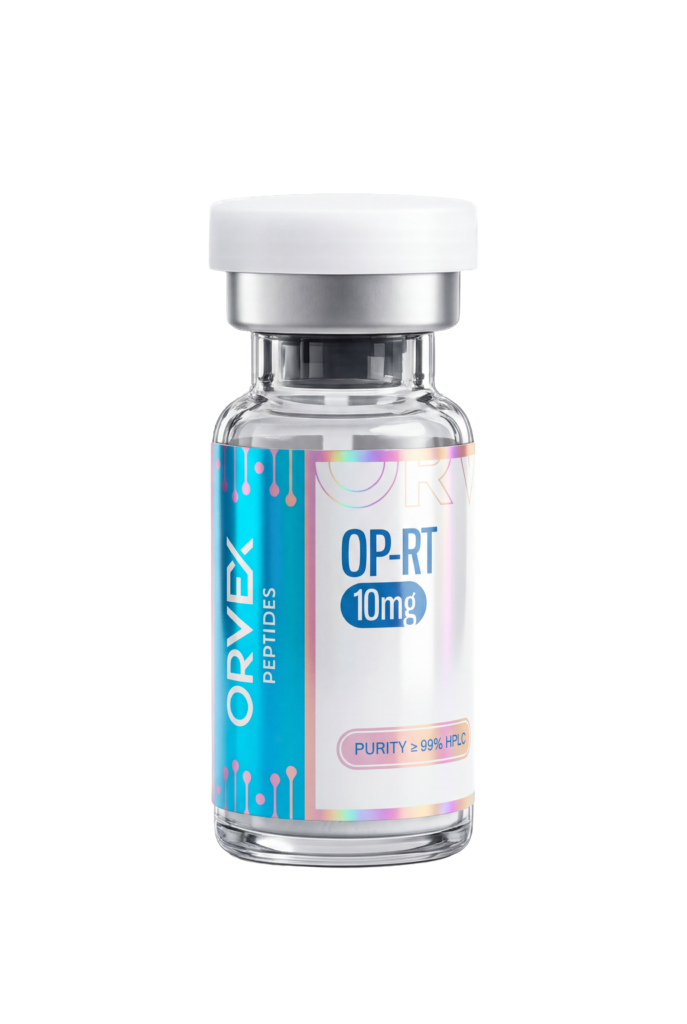
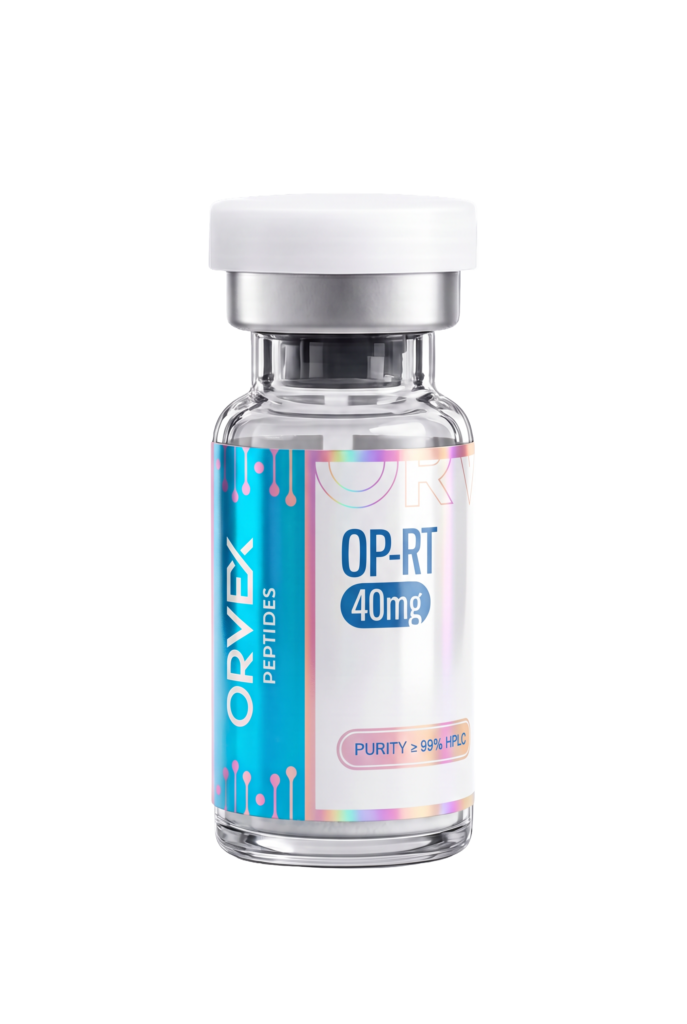
In stock – Ships same day
Compound Identity
OP-Rt is a 39-amino-acid synthetic peptide (MW ≈ 4,571.7 Da) featuring a C18 fatty diacid moiety conjugated via a linker to a lysine residue within a continuous alpha-helical backbone. The fatty acid modification confers albumin binding and extends plasma half-life to approximately six days in pharmacokinetic research models.
Receptor Selectivity Profile
OP-Rt is classified as a triple receptor agonist with documented binding affinity at three hormone receptor subtypes:
GLP-1R (Glucagon-Like Peptide-1 Receptor) — full agonist activity
GIPR (Glucose-Dependent Insulinotropic Polypeptide Receptor) — predominant binding affinity in comparative receptor studies
GCGR (Glucagon Receptor) — partial agonist activity
Comparative receptor binding studies indicate higher potency at the GIPR relative to GLP-1R and GCGR. This differential selectivity profile is the subject of ongoing molecular pharmacology research.
Structural Features
Amino acid count: 39 residues
Molecular weight: ~4,571.7 Da
Structural class: Fatty acid-conjugated helical peptide
Half-life (pharmacokinetic models): ~6 days
Receptor class: Triple GLP-1R/GIPR/GCGR receptor agonist
Areas of Active Scientific Investigation
Receptor Pharmacology Research: In vitro binding kinetics and differential affinity profiling across GLP-1R, GIPR, and GCGR receptor subtypes.
Structural Pharmacology: Studies examining helical peptide conformation and fatty acid-mediated albumin binding.
Pharmacokinetic Research: Characterization of plasma half-life and structural stability in research models.
Comparative Ligand Studies: Research examining triple agonist pharmacodynamic profiles versus single- and dual-receptor agonist peptides.
Regulatory & Research Context
OP-Rt is sold strictly for in vitro research and laboratory use only. It is not intended for human or veterinary use, consumption, or application of any kind. It is not approved by the FDA to diagnose, treat, cure, or prevent any disease or condition. Not for use in any living organism.
Scientific References
Finan B, et al. Science Translational Medicine. 2015; 7(286):286ra72.
Nishizawa M, et al. Journal of Biological Chemistry. 2013; 288(32):22789–22800.
PubMed: PMC3757196 | PMC3258893